Friday, February 22, 2013

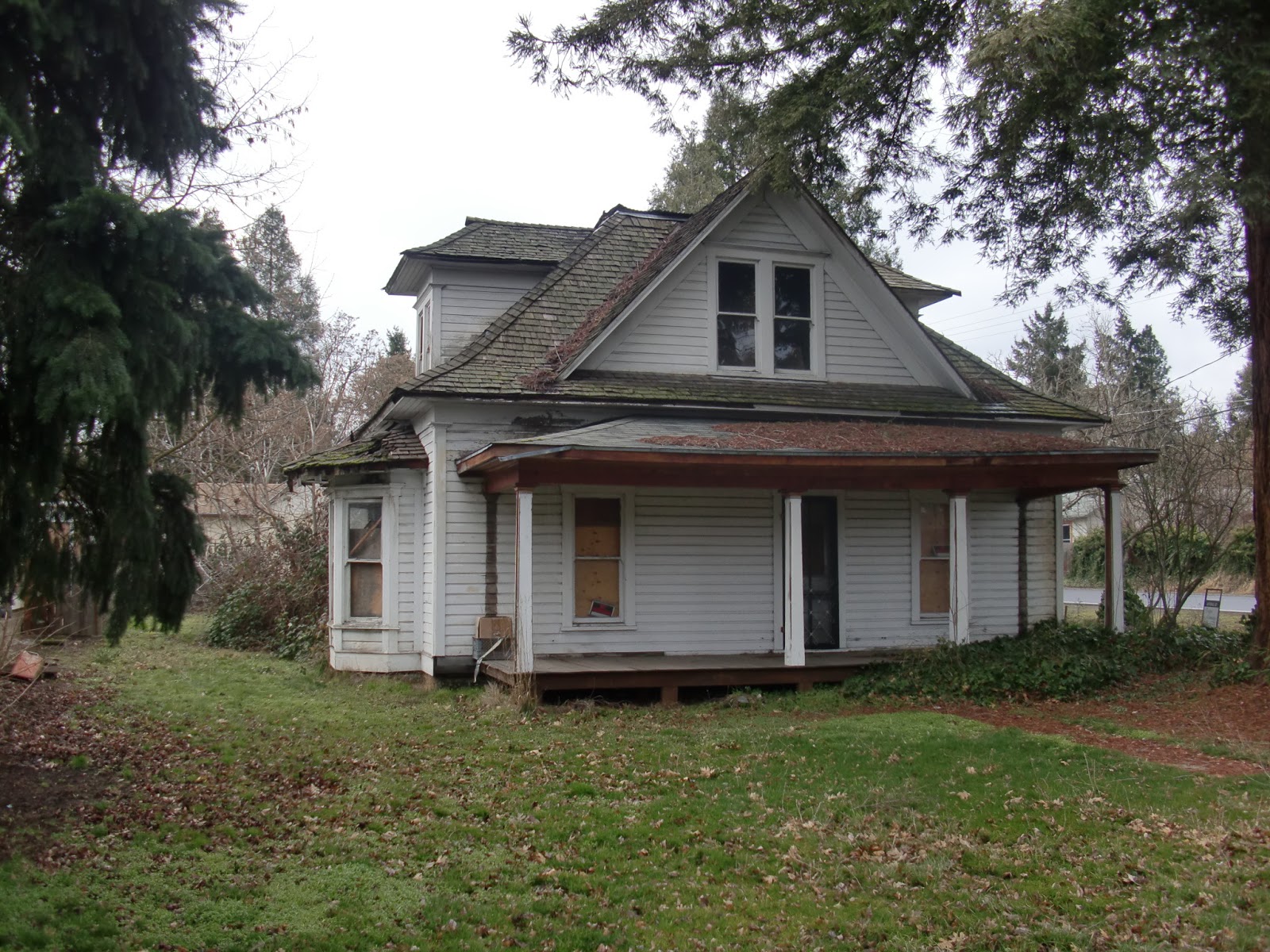
Phoenix Update; The Devenney-Steadman House


Since last posting on this topic, the history of what we now know as the Devenney-Steadman House has come a bit more into focus.  The house was almost certainly built about 1880 (possibly as early as 1875), by the Devenney family.  It eventually came into the possession of Callie Devenney Steadman.  “California” Devenney, born in that state in August 1864, moved to Phoenix at the age of ten and lived there, probably in this house, for the rest of her life.  At some point she married,  Mr. (Robert?) Steadman, and then was divorced (by 1900), but stayed in the family home.  Callie appears to have enjoyed a long and full life in Phoenix, surrounded by relatives and one son, Douglas.  Callie also raised several nieces and nephews from infancy, two of whom, Mrs. Milo Furry and Mrs. Elva Furry, married into another prominent Phoenix family.  Elva and Robert Furry lived on West 2nd Street, next door to Callie, in another 19th century Phoenix house that is still standing.  Callie Steadman passed away at her home, aged 79 years, in November 1943.  Her obituary described her as “A real friend to all, she will be deeply missed by her many friends and neighbors.”


As it turns out, the Devenney-Steadman House was most recently occupied, as a rental, in October 2012.  The owners, who have owned the house for many years, apparently want to move back into it in their retirement.  They felt the house wasn’t in good condition and, with some confusion, the planning department and Phoenix Historical Society originally agreed with that assessment.  However, I think that there isn’t enough information on that, and know full well that little vernacular houses like the Devenney-Steadman House, are built for “stout.”  Such houses, built of high-quality old growth timbers, are usually pretty resilient  and I’ve seen nothing in the main volume that would indicate otherwise.

Earlier this month, the Phoenix Historical Society "recanted" on their approval (their president's term, but I like it....) The Phoenix City Council issued a “stay” of the demolition permit, with the hope of finding a solution and a meeting with the owners to discuss rehabilitation options will happen within a short time.  There are several good options, I think, that would allow them to get what they want and keep this important part of southern Oregon history standing for the future.  Keep your fingers crossed!

Friday, February 1, 2013

The Future of 100-Year Old housing in Phoenix, OR


As expected, the RLS survey of Phoenix is turning up some hidden gems from the 19th and early 20th century.  Some have been lovingly maintained or restored, while others have been, um, converted or improved to meet differing demand.


But that isn't what this blog is focused on today.  It's about the doubtful future of several 100-year old Phoenix buildings that need a hero.  One, known as the Rose House, shown above, is a fine turn-of-the-century volume that is vacant, boarded up, for sale, and assumed to have a questionable, if not immediately threatened, future.  And then there is the Steadman House, as I am told it’s called.  At this point I don’t much know all that much about it, other than it surely looks to be a late-19th century vernacular farmhouse that has been ignored for a bit longer than it should have been.  My understanding is that there is a pending demolition request…whether that is from the owner, or the building official, I do not know.

 
Most people look at little old buildings like this and see nothing but work and dollar signs.  Demolition is the proverbial “clean slate” that allows people who are daunted by the challenges rehabilitation and restoration might bring a chance to convert a problem.  Or so they tend to believe.  And let's face it, it's often pretty easy to demolish a house and "start over." Permits are cheap, and demolition removes all the potential unknowns.  Anybody can build on a vacant lot.  But not everyone does and in Phoenix it is hard not to recall an owner's decision to demolish what was left of the NR-Listed Samuel & Huldah Colver House after it burned.  That lot, a big huge gap right on Main Street, has been vacant for what is now pushing a decade.
  
The other, better, way to look at a house like this is as an opportunity.  Whatever you think about 19th century vernacular farmhouses, we can all agree that they are not building any more of them.  Not all of them can be saved, of course, but most can.  Tearing the "Steadman"  house down will destroy forever one more bit of Phoenix and Oregon’s history.  Restored it could be a gem, and the good thing about these little vernacular structures is that in general they are so simple and straightforward that they are pretty easy, and inexpensive, to restore to glory.  That is if anyone wanted too. And the good news is that there are lots of qualified contractors and others willing and able to help, if they are asked.

The Phoenix City Council is apparently reviewing the demolition request in the near future.  I don't really know enough about this to have an opinion, but I hope somebody in Phoenix gives the little house a shot to survive.  It already has for quite some time and could become a gem, just like several other fine old homes brought back from death's door by creative individuals.  I'll write about Phoenix's successes in the near future too, just to be even-handed.

Saturday, January 26, 2013

Eastham, Morey, Edward, Clara and Parker


Nestled into an arc of headstones at River View Cemetery is a fine marble monument that on its west face reads “Eastham” and on its east, “Morey.”  Historians of Portland, especially of Portland’s electrical utilities, may recognize those names and wonder why they are both found on one marker.  I certainly did.

Parker F. Morey was a mechanical engineer who arrived in Portland in about 1879 and, in 1884, started the United States Electric Lighting and Power Company, one of Portland’s earliest power utilities.  Edward L. Eastham was an attorney in Oregon City.  Prominent and successful, he was among the first to recognize the hydroelectric potential of Willamette Falls and began buying up water rights there with the idea of building a huge generation plant.  In 1888 Eastham, with his water rights, and Morey, with his knowledge and Portland customer base, joined forces and created the Willamette Falls Electric Company.  Eastham was named President.  The following year the new company transmit DC, Direct Current, power from their “Station A” at the Falls all the way to downtown Portland, a distance reported at either 12 or 14 miles, depending upon the source, but universally recognized as one of the first “long distance” transmission of electricity in the world.  The rest, as they say, is history.  The Willamette Falls Electric Company was wildly successful, began buying up its competition both in generation and electric trolleys.  Morey replaced Eastham as President, when the latter died in 1891, and by 1906 the company they founded emerged as the Portland Railway Light and Power Company.  Today that firm is better known as Portland General Electric, which still produces power at the Willamette Falls.


 But still, most business partners, even successful ones who may have had high respect and friendship between them, don't share a burial plot and there was no report that Eastham and Morey were otherwise related by blood or marriage.  In the normal sense, they weren’t. 

Edward Eastham, born in Oregon City in 1848, died on January 18, 1891, before he ever saw how successful his power company would become.  He left a widow, Clara, and six children, one just an infant.  Eastham, also a State Senator, was mourned as “Oregon City’s foremost citizen.

Parker Morey, born in Missouri in 1847, lived longer, though he was just 56 years old when he died.  He and his wife Maud had three children, two girls and boy, before Maud passed in 1888.  I’m not sure exactly when, but soon after Edward’s death, Clara and Parker joined their families into one, Clara inheriting three step-children and Parker six.  When Parker died, on July 7, 1904, the entire family was with him on their farm near Oregon City.


Clara Eastham Morey, died July 23, 1927, at the age of 72.  She was survived by two daughters and four sons, two stepdaughters and one stepson.  At River View Clara's modest headstone is at the center point of the Morey-Eastham monument.  It is flanked on the west by Edward.  Parker is on the east.

Wednesday, January 16, 2013

Phoenix Survey- Whatta Ya Got?


We recently began work on a survey and inventory project in Phoenix, one of the eleven incorporated cities in Jackson County.  Phoenix, originally known as “Gasburg,” was founded by the incredibly interesting Samuel Colver along Bear Creek, in the 1850s.  Colver, a former Texas Ranger, poet, horseman, and character par excellence, built a huge hewn-log home along the main road through the valley.  Colver Hall, sometimes called Fort Colver, was an imposing presence for 150 years, until it burned in a spectacular fire and was, sadly, demolished.  As a student at UofO, I was part of the effort to list the building on the National Register, working with the great Philip Dole.  I can still recall its absolutely great attic.


But there are other fine structures in Phoenix, some almost as old as the Colver House.  One is the Hiram Colver, or Patrick McManus House, shown above as photographed by the original HABS Survey in the 1930s.  Hiram was Sam’s brother or cousin, I forget which.  The house has been listed on the register but most of the others in town are just itching to be identified.  There are dozens of 19th and early 20th century vernacular forms, foursquares and bungalows, related from Phoenix’s rise from rural service center, to railroad station, to Pacific Highway wayside.  Among the cooler things is the former Dr. Malmgren House and Store, the former a rare temple front, shown below, and the latter the last bearing stone building that I know of in southern Oregon.


The town continued to grow after WWII, and I expect to find more than a few former Camp White buildings tucked in among the small ranch houses and minimal eave designs.  And then there is all the cool commercial and institutional stuff, including a fine former Texaco gas station and the Skinner Building, a rare small-town streamline moderne two-story that even has a portal window or two.

The one thing I rather expect to be in short supply is higher-style Victorian-era.  Phoenix wasn’t that kind of town, not since it was called Gasburg.

Thursday, January 3, 2013

Macadam- The White House Road to River View Cemetery


River View Cemetery, located at the corner of Taylors Ferry and Macadam in south Portland, is a largely undocumented gem that I’ve written about here before.  Founded by three of the most influential Portlanders of the 19th century, William S. Ladd, Henry Corbett and Henry Failing, and designed by the noted landscape architect Edward O. Schwagerl, River View’s construction began in 1879 and the cemetery’s governing Association was formed (in Ladd’s office) in December 1882.  For the past few weeks I’ve been writing up what will likely qualify as the most detailed history of River View, from its beginnings through all the changes over the past 130+ years.  This is a continuation of earlier work, all related to the construction that will replace the Sellwood Bridge, just east of the cemetery main entry gates.  Lately I've been researching transportation to River View.


Macadam Avenue, the road that runs the length of the cemetery, west of the river and the railroad line, has an interesting history.  Begun in 1863 by the creatively named Macadamizied Road Company, the route was initially a toll road, providing access to the Fulton House (later renamed the Red House) near Taylors Ferry, and then the White House (there’s that creativity again), which was located further to the south, toward Oswego (no "Lake" yet).  The color-coded houses were saloons of sorts (the White House had a racetrack too), and seem to have been semi-tolerated retreats of the type later called “speakeasys.”  Apparently there was enough traffic to justify what was considered the best roadbed in the Portland area and the road was often just called "The White House Road."  When the White House burned in a spectacular fire in July 1904, it was described as “a resort of sybaritic splendor” (!).  About 1880 the Macadam Road was sold to Multnomah County and the tolls were ended.

 
Macadam, named after Scottish engineer John Macadam, was a mixture of tar and small gravel, compacted into a state-of-the-art smooth surface.  Mr. Macadam called it “Tarmac,” essentially a predecessor to today’s common asphalt road surface.  The White House Road, with its long straight-aways along the riverfront, quickly became the favorite hangout of Portland’s horse set, attracting races between the city’s fastest carriages.  The Multnomah Driving Club, unimpressed by the County's maintenance of the road, actually raised its own funds to periodically grade and water the route (to reduce dust) so that they could race in style.  It’s not hard to envision grudge matches a’la American Graffiti, with the loser buying everyone a round at the White House.

The route along the river was a logical place for new forms of transport too.  River View was located where it was, at least partially, because it avoided the ferry across the river to Lone Fir Cemetery.  River View built its own wharf, where steamboats with funeral corteges could tie up before the carriage ride up the hill to the gravesite, but the day's of steamboats were numbered.  One of Portland’s first electric trolley lines led from downtown to River View (and the Greenwood Hills Cemetery, nearby).  That line, completed by mid-October 1889, was called the Fulton-Cemeteries Line.  It was among the city's most popular, and beautiful, rides, cruising along the river, with views to Mt. Hood, and the cemetery itself.  People would take weekend excursions to River View, both to visit the dead and have a picnic lunch under the trees.  By the turn-of-the-century the City & Suburban Railway Company was running special “funeral cars” directly to the cemetery, after building a depot within its grounds.  The Southern Pacific Railroad (built upon a narrow gauge route developed by the Portland & Willamette Valley RR), also had a line running parallel to Macadam.  When SP built a standard gauge line for its trains, it converted the earlier route for use by its Red Electric Interurbans.  And finally, as carriages and trolleys gave way to automobiles, the old Macadam Road was widened and upgraded again and emerges as a portion of Oregon’s Pacific Highway, later US Highway 99, the major route along the entire west coast of the nation.


While River View’s history inside the gate is fascinating, and certainly worthy of the extended study it’s finally getting, there’s a lot of transportation history just to the east.  Next time you drive down what is now SW Macadam Avenue, imagine yourself in a fine carriage, pulled by a fast pair.  Maybe you can stop somewhere had have a beer.